The Lure of Secrets in Fiction

I have a confession to make. I’m guilty of flipping to the last pages of a book to find out the secrets at the end.

I’m better than I used to be. When I was in primary school, I was a big fan of the mystery series, The Nancy Drew Files, and used to cheat by reading the ending more often than not. These days, I appreciate the pay-off from exercising patience (I simply read faster to get to the big reveal).

In her popular blog, Helping Writers Become Authors, K.M. Weiland states there is only one reason that readers read, and that’s curiosity. A clever author will “milk that secret for everything it’s worth” if they want the reader to continue reading their book (or you could just do what I did, and skip to the end).

I realised that I’ve always preferred to read (and write) stories based around a key secret and the consequences of that secret being revealed. I even noticed that ‘Secrets’ is one of the most popular words in the titles of books I’ve recently read and enjoyed:

    The Secrets at Ocean’s Edge by Kali Napier
    The Husband’s Secret by Liane Moriarty
    Little Secrets by Anna Snoekstra
    The Secrets She Keeps by Michael Robotham
    Her Mother’s Secret by Natasha Lester
    The Secrets of Wishtide by Kate Saunders
    The Secret Keeper by Kate Morton

I’m not the only person who can’t resist a story with a shocking secret.

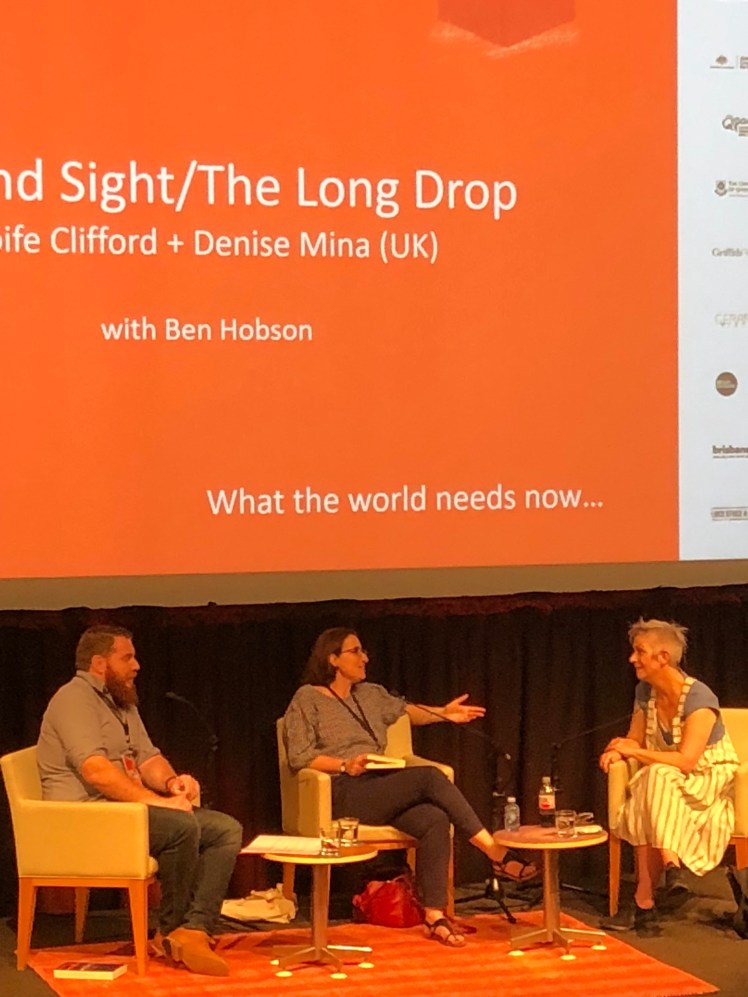
At this year’s Brisbane Writer’s Festival (BWF2018), I attended a session with crime fiction writers Aoife Clifford, author of All These Perfect Strangers and Second Sight, and the prolific Denise Mina, currently promoting her true crime novel, The Long Drop. The panel was chaired by Brisbane author, Ben Hobson (To Become A Whale) who asked both authors about secrets in fiction (predominantly crime fiction). Aoife noted that at the heart of a crime novel is a secret, especially in a country town or a place where you think you know everybody, but you don’t. Denise agreed that almost all crime fiction is based on getting the reader to “wonder something”.

As demonstrated by my list of ‘secret’ books above above, crime fiction isn’t the only genre using secrets to lure readers. There’s crime fiction on that list, but also historical fiction, and another popular genre for secrets – domestic noir. In his blog post, The Secret to Secrets in Novels on This Business of Writing, author C. Patrick Schulze notes that almost every type of novel can use the power of secrets by creating suspense, and to enhance the climax by revealing a shocking plot twist. A secret also provides an excellent source of conflict between characters. As Aoife Clifford stated at BWF2018, secrets are great because there’s so many things that can go wrong. They affect the relationships of characters who wonder, ‘what else are you keeping from me?’

The secret may not always be the answer to a whodunit but could be a family secret kept private, or as in some popular classics, a hidden wife locked in an upstairs chamber or the identity of a mysterious benefactor. One of the most popular novels (and now television adaptations) of late is Liane Moriarty’s Big Little Lies. The three main characters are all keeping a raft of secrets, each with their own potentially devastating consequences.

A writer with the ability to craft a well-timed secret is a bit of a secret in itself. At BWF2018, Ben asked Aoife and Denise about writing scenes where secrets are revealed. Aoife said this was the hardest thing of all. She stated that structure is really important and suggested delivering the message in small amounts by cutting away and then coming back, and telling the story of one important event from six different perspectives. Denise agreed with the idea of “parcelling information out” and asking yourself if you want the reader knowing before the protagonist. In her post, K.M. Weiland recommends writers reveal the answer at the latest possible moment in the story and at a time when it will be most devastating to the characters. Sometimes that may be halfway through the novel as in Jane Eyre by Charlotte Bronte and Gone Girl by Gillian Flynn.

Secrets in fiction play on the reader’s desire to know the truth. A clever author will get the reader involved by reaching out to them, allowing them to become an active participant in the story. Finding out the answers can become a bit of an addiction. In the words of Aoife Clifford: “Secrets are delicious, we can’t get enough of secrets.”

What is the best book you’ve read with a secret? Let me know in the comments section below.
Buy Second Sight by Aoife Clifford here.
Buy The Long Drop by Denise Mina here.

Buy To Become A Whale by Ben Hobson here.

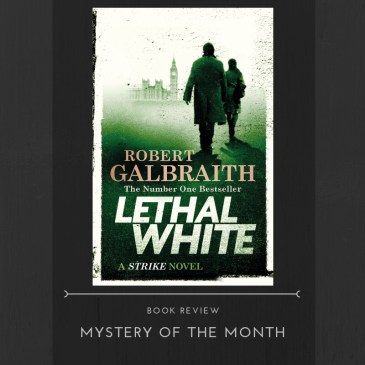
Mystery of the Month – Lethal White

Lethal White, otherwise known as Lethal Wait, amiright?

Since October 2015, I’ve been slowly turning to dust waiting for the fourth instalment of Robert Galbraith’s crime fiction series about Cornish detective, Cormoran Strike. The third book, Career of Evil, ended with Strike capturing the “Shacklewell Ripper”, crashing Robin’s wedding and receiving a death stare from her now-husband, Matthew.

Lethal White begins by tying off the loose ends following Robin’s “I do”. For those readers lamenting Robin’s decision to proceed with her marriage to the obviously unsuitable Matthew, and who have been wondering what she will do when she learns Matthew blocked Strike’s calls on her mobile phone (i.e. all readers); this gets answered in a lengthy prologue at the start of the book.

The novel then jumps forward to one year later. London is preparing for the Olympics. Business is booming following Strike’s fame as the man who caught the Ripper, and he’s distracting himself from thoughts of Robin with the beautiful and convenient Lorelei. Meanwhile, Robin has been experiencing panic attacks and comparing her marriage to the act of “moving chess pieces on a board that was vibrating in the preliminary tremors of an earthquake.”

The plot kicks off when Billy, a disturbed young man, bursts into Strike’s office and says he witnessed a child being strangled “up near the horse” and buried in a dell. An elaborate spiderweb of a story ensues. Strike discovers the dell is on an Oxfordshire property belonging to Minister for Culture, Jasper Chiswell, where Billy and his older brother, Jimmy Knight, grew up. Chiswell subsequently hires Strike and Robin to investigate a case of blackmail involving Jimmy, the leader of a radical left wing political group protesting the Olympics. Robin goes undercover as Chiswell’s goddaughter, working in the House of Commons to get dirt on Minister for Sport, Della Winn and her lecherous husband, Geraint. Here she meets Chiswell’s latest wife, the much younger, horse-obsessed Kinvara, his industrious daughter, Izzy, and disturbingly charming illegitimate son, Raphael.

There’s plenty of sordid activity amidst both groups – affairs, sexual harassment, deception, double crossing and betrayal which seem disparate but are somehow masterfully connected by the end of the novel. And at 650 pages, it’s a long time to wait for answers. However, I was so absorbed in the story that by the time we finally reached the end of Part 1, and the suitably gruesome and dramatic discovery of the dead body, I’d forgotten I was reading a murder mystery. In fact, there’s so much going on it’s impossible for the reader to correctly guess the answers to any of the novel’s questions – why is Chiswell being blackmailed? Why are they quoting Latin? What do all of these horses have to do with anything? Towards the end when Strike is encouraging Robin to piece together the solution, even she gives up and chooses instead to sip champagne and enjoy a warm breeze.

There’s an overarching theme of ‘pairs’ throughout the novel but as usual, the core of the story is the pairing of Strike and Robin. Amidst second-guessing their feelings for other and analysing each other’s romantic relationships, their discussion of the case and their banter as they bounce theories off each other provides the most enjoyable parts of the novel. Unfortunately, in Lethal White, much of this doesn’t occur until the final quarter when Strike and Robin are literally digging in the dirt for answers.

J.K. Rowling (we all know she’s Robert Galbraith, so I won’t digress) wrote the best-selling series of books in history so naturally, everyone has high expectations for her latest work. Lethal White doesn’t disappoint – it’s superior storytelling, balancing an entertaining mystery with the personal lives of its main characters, especially Robin, who has hit a wall and uses this novel to find her feet again. There’s some clever writing between the lines, themes with multiple interpretations and subtle political commentary including a statement Della makes during Strike’s interview about men’s crimes always being blamed on women “who should have stopped it, who should have acted, who must have known.”

Several other reviewers have stated it needs a good edit, but we’ll leave that up to the poor sod who has to turn it into a screenplay for the next television adaptation. This is a novel to savour while we eagerly await the next one.

Lethal White by Robert Galbraith is published in Australia by Hachette.

Standout Simile: –

It was no use trying to suppress the panic: that only made it fight back, trying to bend her to its will. She must ride it out, as though the fear was a bolting horse, easing it onto a more manageable course. So she stood motionless, palms pressed against the partition walls, speaking to herself inside her head as though she were an animal handler, and her body, in its irrational terror, a frantic prey creature.